
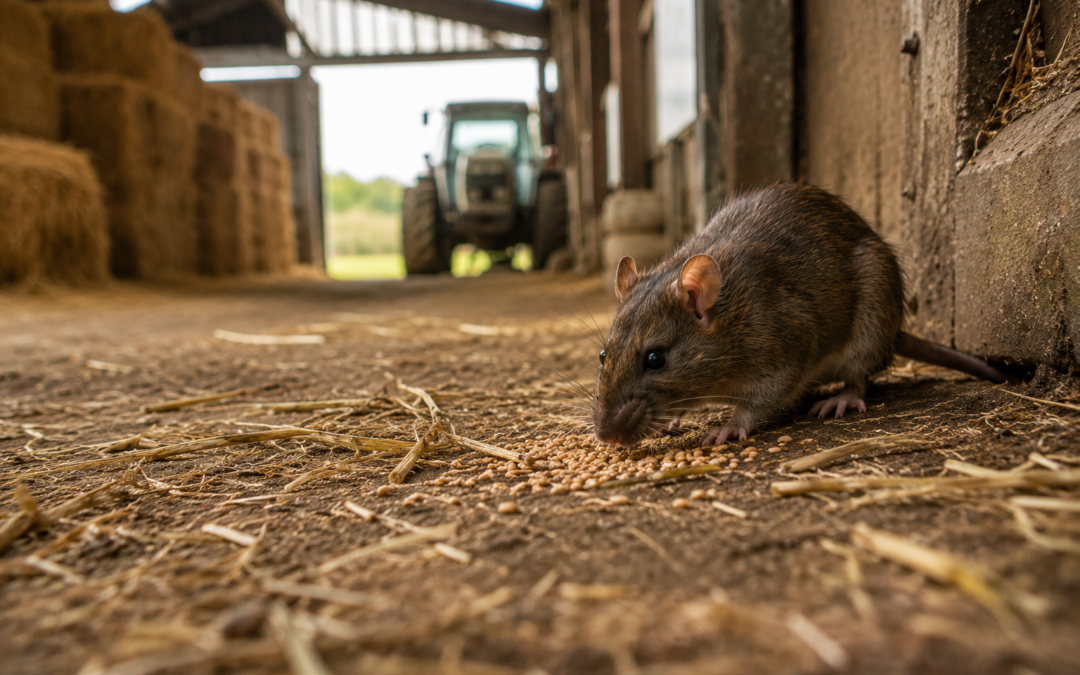
Farmers are some of the most observant people you will ever meet. They will notice a gate hanging slightly differently, a missing lamb from a field or a change in the sound of a tractor engine long before anyone else would.
Yet one of the most common things I hear when visiting farms is:
“We’ve only seen one rat.”
The trouble is, when it comes to rats, seeing one usually means there are many more quietly going about their business unseen.
Rats are incredibly cautious creatures. They are mostly active during darkness and prefer to travel hidden behind feed bins, stacked hay, machinery and along building edges where they feel protected. A single sighting during daylight hours often means competition within the colony is increasing, forcing some rats to take greater risks to find food.
And farms, unfortunately, can provide everything a rat could ever dream of.
Warm buildings.
Constant food supplies.
Water.
Shelter from predators.
Endless hiding places.
Modern farms work hard to maintain cleanliness and biosecurity, but rodents are opportunists and will exploit even the smallest weakness. A torn feed bag tucked behind a pallet, spilled grain around a silo or an unused corner of a livestock building can quickly become a feeding point.
One female rat can produce several litters each year and populations can increase far quicker than many people realise. Before long, what started as “the odd rat” becomes burrowing under concrete, contaminating feed stores and damaging insulation, wiring and equipment.
Rodents are not simply an inconvenience on farms either.
They pose genuine risks to livestock, stored feed and business reputation. Diseases such as Salmonella and Leptospirosis can spread through rat urine and droppings, while contamination of feed can result in costly waste and potential health concerns for animals.
I often find the busiest farms can sometimes be the most vulnerable, not because standards are poor, but because there is simply so much activity, movement and storage taking place every single day.
Harvest periods are particularly interesting. As fields are cut and habitats disturbed, rodents suddenly lose cover and natural food sources. This often drives rats and mice toward grain stores, livestock buildings and feed areas in significant numbers.
It is one of the reasons regular monitoring matters so much.
Effective pest control on farms is rarely about a single visit or reacting once a problem becomes obvious. The best control comes from understanding seasonal behaviour, identifying pressure points and spotting activity before populations become established.
Simple things can make a huge difference:
keeping vegetation controlled around buildings,
managing spillages quickly,
checking feed storage areas regularly,
and ensuring proofing issues are dealt with early.
Farms are living, working environments and no two are ever the same. Some battle continual pressure from nearby watercourses, others from neighbouring land, old stone buildings or large livestock operations.
That is why pest control should never be approached as a “one size fits all” service.
Every farm tells its own story if you know what signs to look for.
So the next time you spot “just one rat”, it may be worth asking what else is happening quietly behind the scenes.