
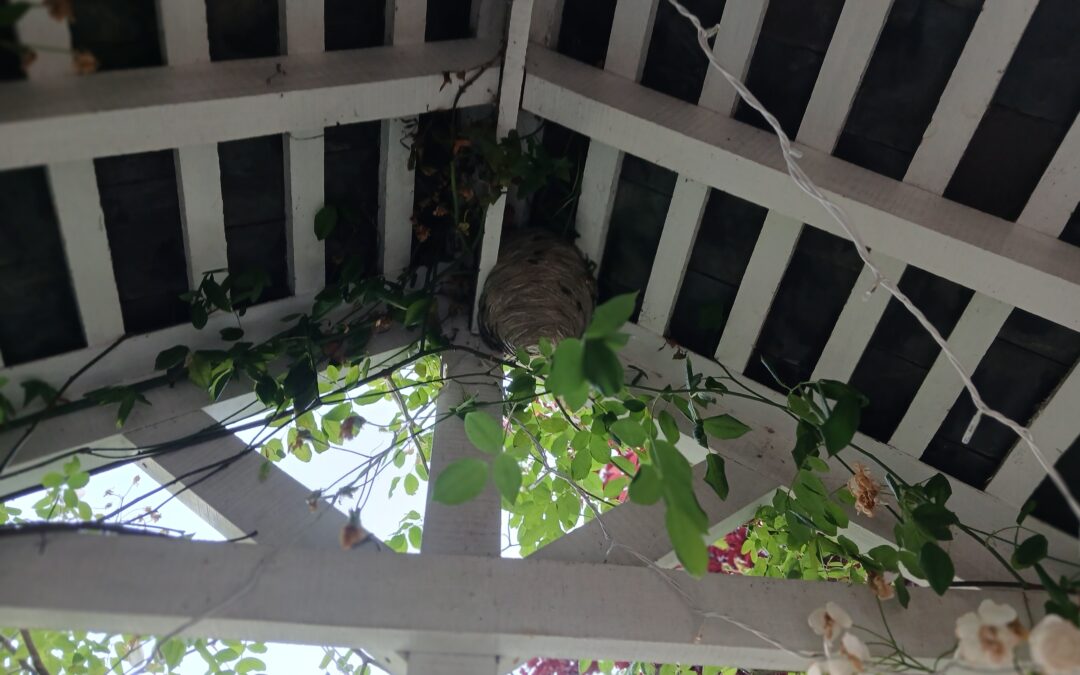
If you think wasps only build nests in the corner of your garden shed, think again! Wasps are incredibly clever builders and will make use of almost any suitable space that keeps them sheltered, dry and protected from the Lincolnshire weather.
Over the years, we have seen nests turn up in some very unexpected places right here in Lincolnshire. Here are four real-world examples of wasp nest callouts we have attended, along with some of the signs you can look out for around your own property.
If you are currently dealing with a nest, you can also find out more about our
professional wasp nest treatment and pest control services.
1. The Porch Swinger (Riseholme, Lincoln)
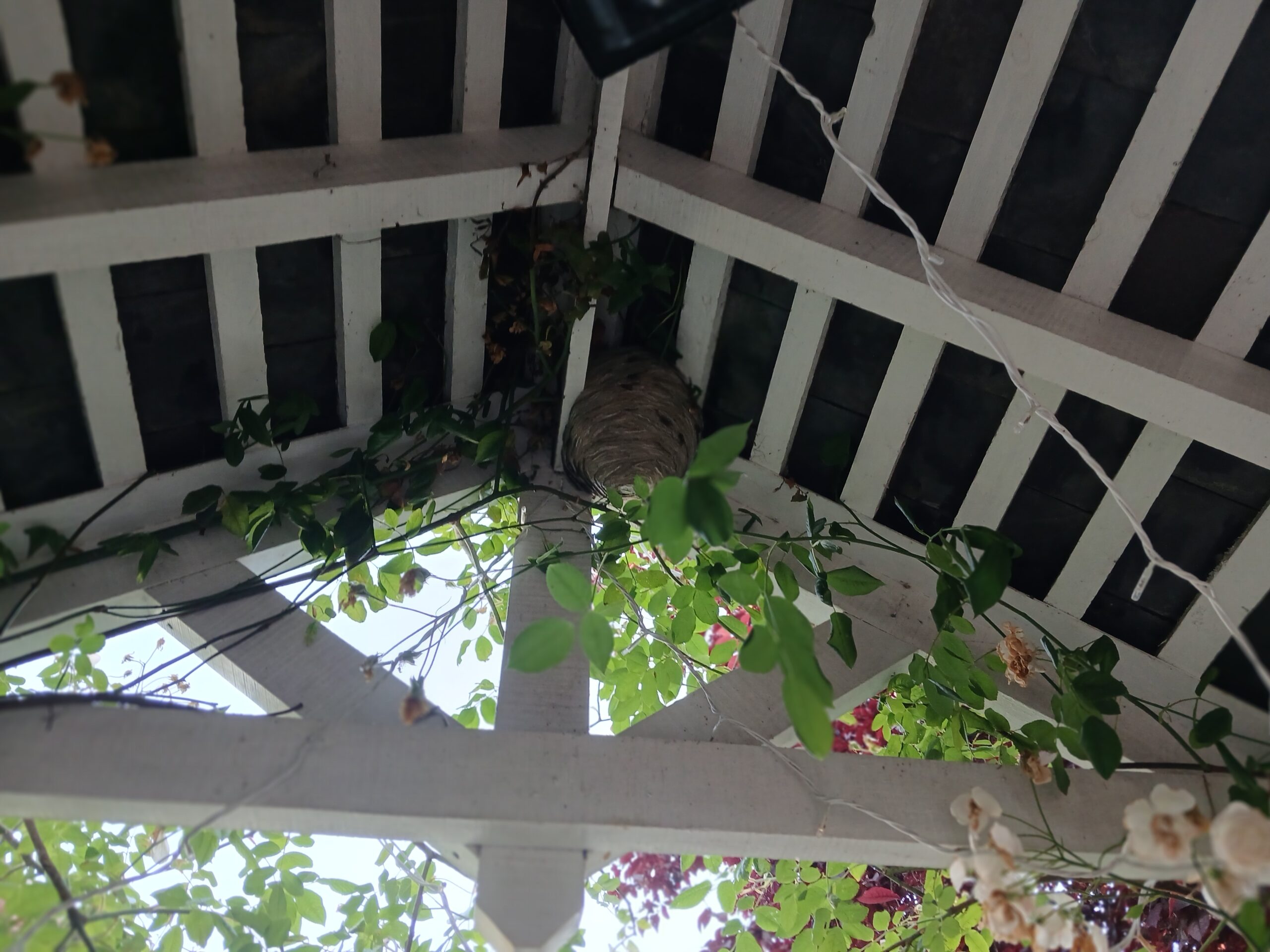
A wasp nest tucked beneath a sheltered structure at a property in Riseholme.
We recently captured footage of a large, fully exposed wasp nest hanging directly beneath a residential porch canopy in Riseholme.
Although a nest hanging out in the open might seem like a strange choice, the location actually gave the colony exactly what it needed. The porch roof protected the nest from rain while still providing a clear flight path for the wasps coming and going throughout the day.
The problem, of course, was that this also put the nest very close to an area regularly used by the people living at the property.
Once the nest had been identified, we were able to assess the situation and carry out the appropriate treatment safely.
2. The Garden Surprise (Welton)
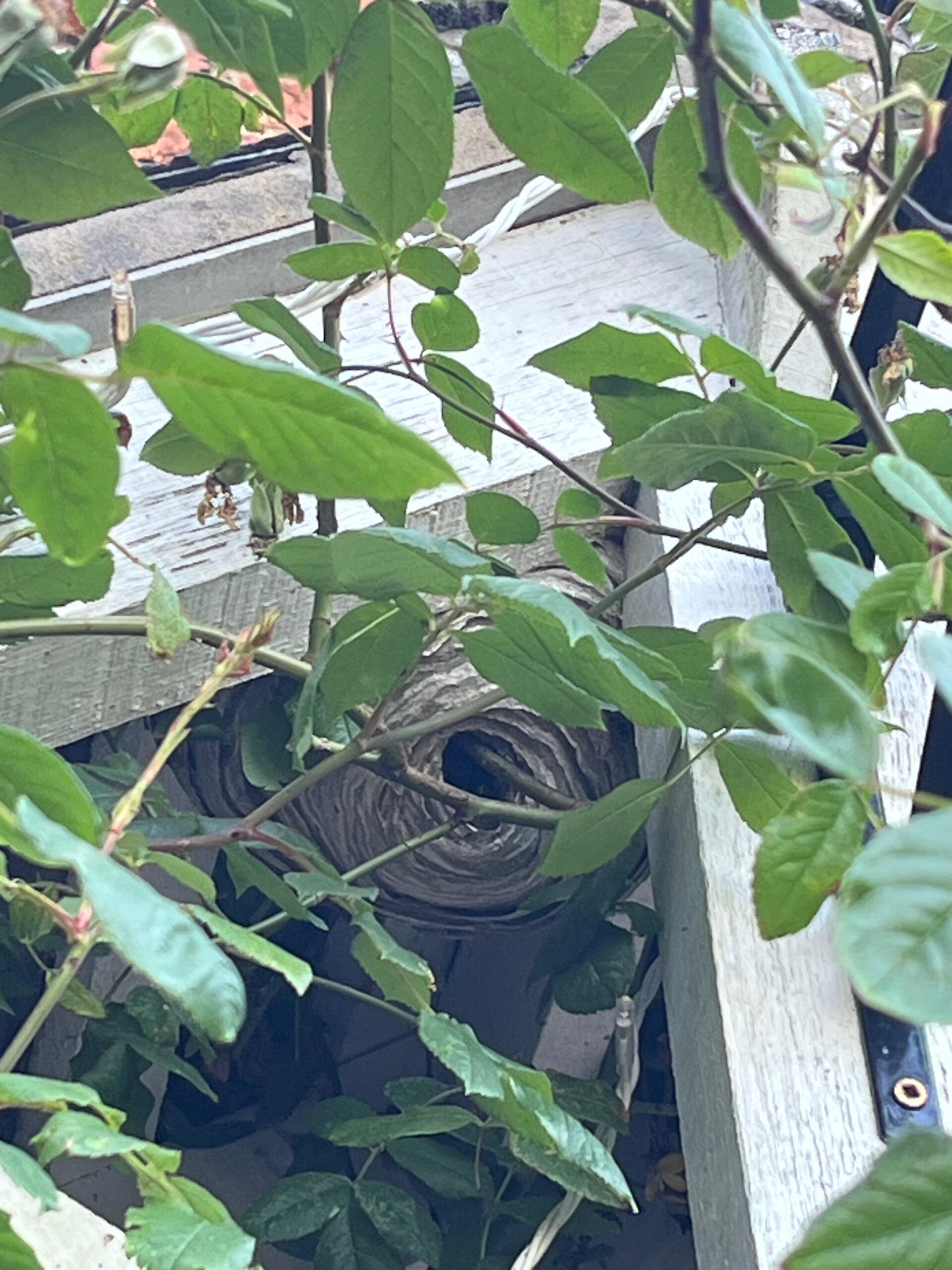
Hidden amongst the foliage, this nest could easily have been missed until somebody got too close.
You don’t always have to look up at your roofline to find a wasp nest.
At this property in Welton, the nest had been tucked away amongst garden trees and shrubs where the surrounding foliage helped conceal it.
Earlier in the season, green leaves can make nests like this surprisingly difficult to spot. As the colony grows through the summer, however, the nest becomes larger and the amount of wasp traffic around it increases.
That can make everyday jobs such as hedge trimming or pruning particularly risky if nobody realises a nest is there.
One of the best warning signs is repeated activity. If you regularly see wasps disappearing into exactly the same part of a hedge, shrub or climbing plant, there may be a nest hidden inside.
3. The Hidden Roof Invader (Stow)
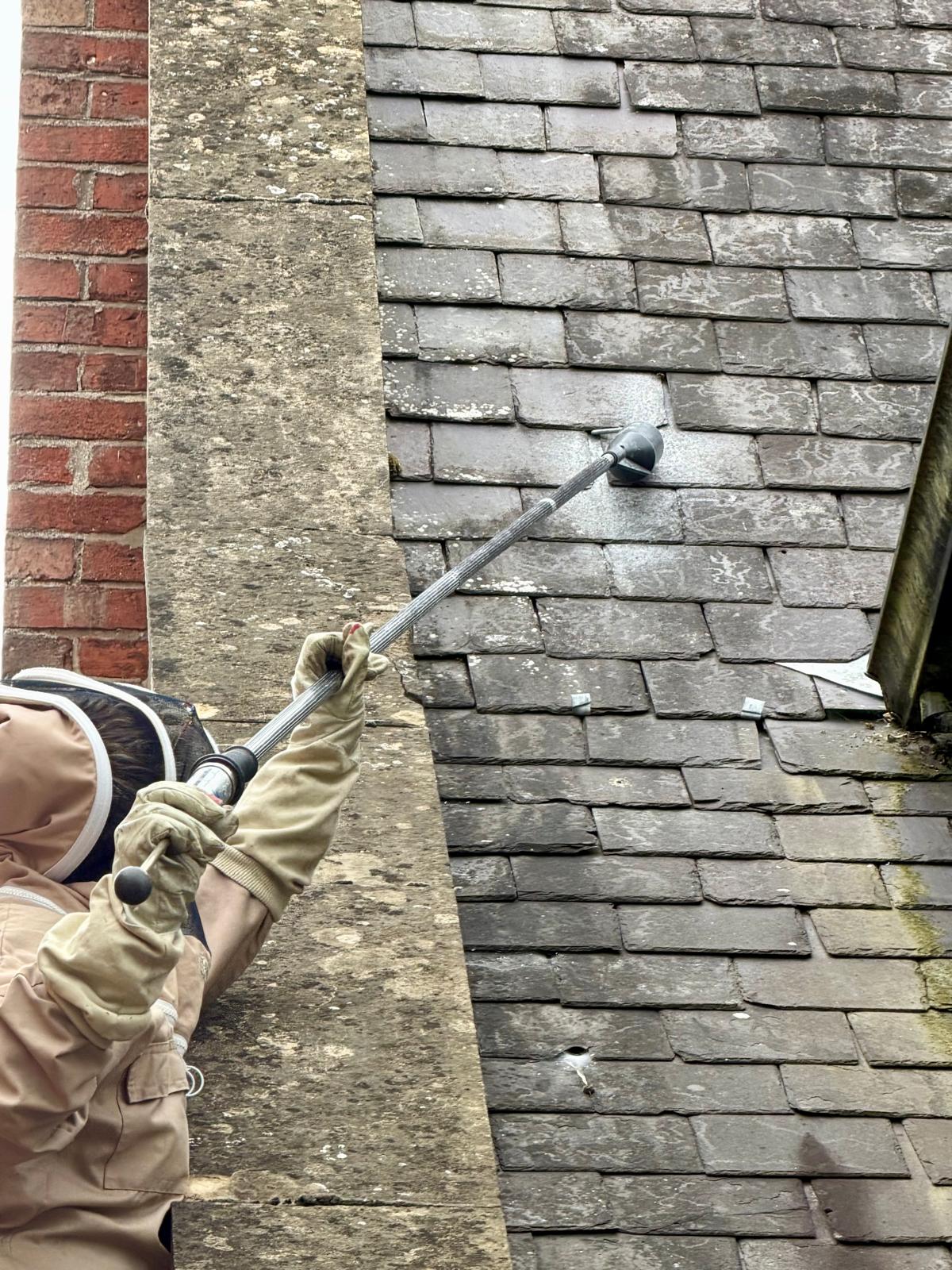
Treating wasp activity beneath roof tiles at a property in Stow.
This is one of the more common places we find wasp activity.
Wasps can crawl through surprisingly small gaps beneath roof tiles and establish a nest inside the dark, sheltered roof space beyond.
From the ground, homeowners may only see a handful of wasps entering and leaving through one particular gap. Behind the tiles, however, a much larger colony may be developing completely out of sight.
Wasp nests are remarkably adaptable and will grow to fit the space available to them, including awkward cavities beneath roofing materials.
If you notice a steady stream of wasps repeatedly disappearing underneath the same roof tile, soffit or fascia, it is worth having the area assessed rather than blocking the entrance yourself. You can read more about our
wasp nest treatment service in Lincolnshire
if you are seeing this type of activity around your property.
A Reminder of Just How Large Wasp Nests Can Become
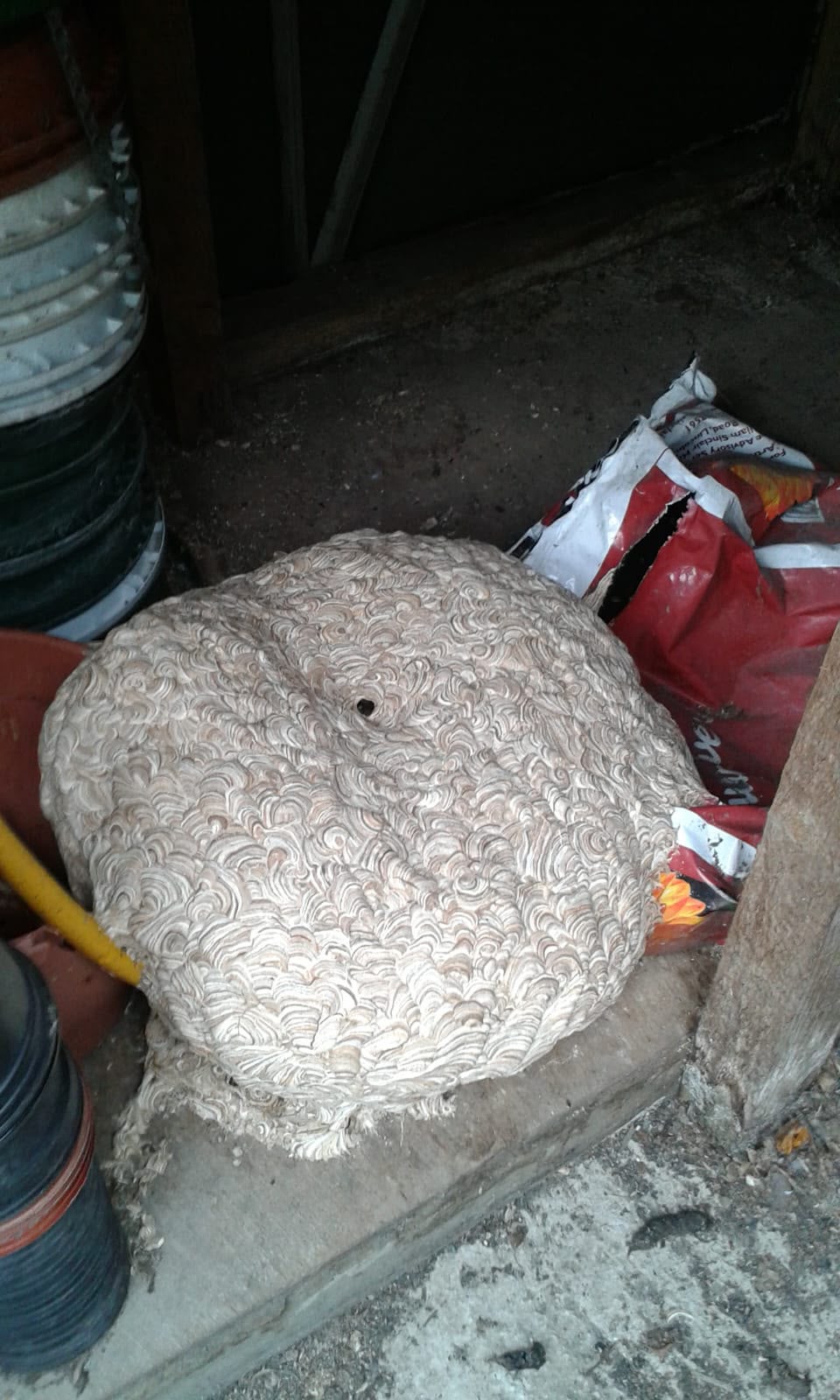
Another nest we encountered in a sheltered shed or storage area. By the time it was discovered, it had grown to roughly the size of the bottom of a bin lid.
This separate example shows just how substantial a wasp nest can become when a colony finds somewhere sheltered and is able to develop without being disturbed.
Sheds, garages and other storage areas can provide excellent nesting conditions because they are dry, protected from the weather and may remain undisturbed for long periods.
A nest does not usually begin this size. It grows throughout the season as the colony increases, which is why something that goes unnoticed earlier in the year can become very impressive later in the summer.
4. The Utility Box Shock (Saxilby)
This was easily one of our most intense callouts.
A homeowner in Saxilby opened their outside electricity meter box to take a reading, completely unaware that a colony of wasps had moved inside.
Opening the plastic door disturbed and damaged the nest, triggering an immediate defensive response from the colony.
When a nest is hidden inside a small enclosed area like this, there may be very little warning before somebody opens the cover and suddenly finds themselves extremely close to the wasps.
Thankfully, we were able to attend and safely treat the area.
It’s a good reminder to take a quick look for insect activity before opening outside meter boxes, utility covers or similar compartments, particularly during the warmer months.
Never spray insecticide or introduce liquids into an electricity meter box yourself. If you suspect wasps are nesting around electrical equipment, professional assessment is the safest option.
What Do These Wasp Nests Have in Common?
The locations may have been very different, but they all offered wasps some of the same basic things:
- A dry or sheltered place to build.
- Protection from wind and rain.
- Relatively little disturbance.
- An easy route in and out of the nest.
- Enough space for the colony to expand as the season progressed.
The nest itself is not always the first thing you’ll notice.
Quite often, the clearest sign of a nearby nest is simply a regular stream of wasps flying backwards and forwards to exactly the same location.
Where Should You Look for Wasp Activity?
During spring and summer, it’s worth keeping an eye on areas such as:
- Roof tiles, soffits and fascia boards.
- Porches and covered entrances.
- Sheds, garages and outbuildings.
- Trees, hedges and dense shrubs.
- Wall cavities and small gaps in brickwork.
- Meter boxes and outside utility covers.
Seeing the occasional wasp in your garden is perfectly normal. What you are looking for is repeated, concentrated activity around one particular point.
If you are unsure whether the activity you are seeing needs professional treatment, our
pest control service page
explains more about the types of pest problems Queen Bee Pest Management can help with.
Spotted Wasps Buzzing Around Your Property?
Don’t risk getting stung trying to handle an active nest yourself, particularly if it is hidden inside a roof, wall cavity or close to electrical equipment.
If you contact Queen Bee Pest Management about a possible wasp nest, it helps if you can tell us:
- Approximately how large the nest looks, if it is visible.
- Where on the property you are seeing the most wasp traffic.
- Your specific town or village in Lincolnshire.
If the nest cannot be seen, don’t worry. Describing where the wasps are entering and leaving is often just as useful.
Please don’t put yourself at risk to obtain a photograph.
Queen Bee Pest Management provides professional wasp nest treatment in Lincoln and surrounding areas across Lincolnshire.
Need help with a wasp nest?
Contact Queen Bee Pest Management,
call 07984 436007
or email
hello@queenbeepestmanagement.co.uk.